New Cover for Cthulhu Unbound

Book cover design is one of those areas where I’m still learning. Over the last couple of months I’ve been working on getting better at it. The first cover that I did myself was for Cthulhu Unbound, my first self-published ebook. If you don’t have a copy, I highly recommend picking one up. It’s a satirical Lovecraftian tale that pretty much reads like the real thing until you get to the twist at the end.

At any rate, the old cover used the same image as the current one, but the difference was that when I put it together I tried to employ the flashing color method to make it look cool by using red letters on a green background. As a lossless PNG it looked great, but when rendered as a JPG it turned into a mess and looked kind of terrible. And unfortunately, JPG is the standard that gets used everywhere. I spent awhile trying to fix it so that the JPG would still look good, but eventually I gave up.

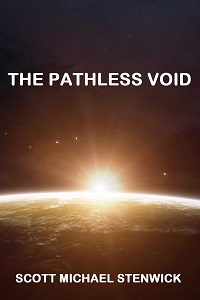
More recently, I decided to redo the cover. I put together a new version that uses white text instead of red on the green background. As you can see it looks a lot better with the white, especially as a JPG. I did like the red lettering, but one of the things you learn producing books is that some things just don’t work. You need to experiment, and keep at it until you get something that really works. The covers I’ve done since then have been better, including the one for The Pathless Void that I posted a week ago. That one is minimalistic, but it really looks great and I can’t think of anything that would improve it.

Anyway, I haven’t talked about Cthulhu Unbound in awhile but it’s still out there, and now it has a cool new cover for you to check out. The ebook includes the short story and a sample from the beginning of my novel Arcana for your reading pleasure.

That Was Quick!

My new science fiction novella The Pathless Void is now available to buy from Amazon and Smashwords. If you’re a fan of old-school science fiction, check it out. I think you will like it.

As an aside, I think this is the first story I’ve ever published anywhere that doesn’t have anything paranormal in it whatsoever, unless you count speculative future technology and a salvaged alien spacecraft. But there are no spells or psychic powers or anything like that, just aliens and tech. Enjoy!

Upcoming New Release – The Pathless Void

For years my Welcome page has said that I write science fiction, but up until now I’ve never actually published any.

The Pathless Void was an unofficial NaNoWriMo project from years ago. It was my first attempt at writing anything so quickly, and I was happy with how the first forty thousand words turned out. But while I did clear fifty thousand words during the month, I decided that the last ten or twelve thousand were not very good. So the project has languished since that time.

What I’ve decided to do is go ahead and publish the first forty thousand words as a novella in ebook format. The original book was intended to consist of two sections about that length, each a mostly self-contained narrative, and what I’ve published now is the first of those two. Down the road I plan on serializing the story in order to continue it, but the second section will go in a very different direction from what I wrote the first time around.

The upside is that you will be able to get the ebook and read and the story as soon as it’s reviewed and accepted on Smashwords and Amazon – at least the first installment. It reminds me a lot of some of the “Golden Age” sci-fi that I read when I was younger, with speculative space travel technology based on our current scientific understanding but extrapolated into the future. I hope you will enjoy it as much as I did when I was writing it.

As soon as I have links where you can order the new ebook of The Pathless Void, I’ll post them here. Watch this space for updates!

Learning CreateSpace

My self-publishing adventure continues!

Lately I’ve been learning how to do CreateSpace so that I can put out my own print books as well as ebooks. Almost two years ago now I put together my short story Cthulhu Unbound, a satirical Lovecraftian piece, and bundled it with the prelude to Arcana in an effort to boost my ebook sales. As you can see from those sales ranks, so far it hasn’t really worked, but obviously one short story a writing career does not make. I’m more tenacious than that.

Between working with my Moonfire Publishing editor on Ipswich and Written in Blood, which are still on track to come out this summer, I have another project that I think many of you will find amusing. A few of you have seen it already, and heard me read a bit here and there. That’s what I really need CreateSpace for, since I want to release both a print version and an ebook this time around. So I’ve been learning the ins and out of page layout, designing covers, and all that good stuff. It’s fun, though it helps if you’re (A) obsessive, (B) an IT person, or (C) both, like me.

So why CreateSpace? There are other options out there that don’t support Amazon’s evil empire, but unfortunately at this point none of them really provide the same level of exposure. Amazon is now something like 40% of the entire book market, which when you think about it is pretty nuts. But the bottom line is that they do appear to have the best publish-on-demand setup, and no surprise, it integrates into their online market better than anybody else’s does. You can make an argument for going with somebody else, but let’s face it – margins in book sales are so tight these days that every little bit makes a difference.

As for that new project – consider this a bit of a teaser. Right now I’m in the process of putting the book together, and I’m not going to be announcing what it is until that’s done and I’m a little further along. Suffice it to say, it’s a great, great classy book that I’m sure you all will love to read. And I’m going to leave it at that for now.

Switch Modalities

I’ve been doing a lot of work with my editor at Moonfire Publishing lately, finishing up the remaining work on my upcoming summer releases. So that’s where my mind has been. I thought that today I would share one of the best tricks that I’ve been able to come up with for editing your work when you don’t have an editor, and are trying to get a manuscript ready to self-publish – switching modalities.

Editing books is pretty much the bane of the self-published author’s existence. One of the biggest differences between traditionally published books and self-published books is the quality of the editing. You can hire a freelance editor to work on your manuscript, but that can cost thousands of dollars. If you don’t have that kind of money, here’s a handy trick that will help you edit manuscripts on your own.

Editing your own work is so difficult because of a phenomenon called “word blindness.” If you’ve ever tried to edit a story or a novel, you’ll know what I’m talking about. You’ll go over your manuscript again and again, and you won’t find anything wrong with it. But then your work is published, and you realize that some parts of it still have typos, errors, sentences that don’t make sense, and so forth. You were sure they weren’t there when you proofed the thing.

Much of that is a product of composing your work on a computer. Some authors write by hand and then transcribe, and that does work for catching a lot of errors. But it’s also a great big pain in the butt. If you’re a poor transcription typist like I am, it takes forever. Composing on a computer is also a lot faster than writing by hand. The problem is that when you compose on a computer and do all your editing on a computer, word blindness is hard to avoid.

The simple solution is to shift modalities. First, compose and edit your manuscript on the computer until you are happy with it. Then switch modalities – print the manuscript out and edit it again, with a pen on paper. This seems kind of silly, but it really does work. When your brain reads through text on paper, the words are processed slightly differently than they are on a computer. So much of your familiarity of your manuscript is short-circuited.

Once you have your on-paper changes, and you will have some, go back into your digital manuscript and update it to reflect those changes. Then print the whole thing out again, and read the printout out loud. Yes, read the whole thing. When you run into issues, and you probably will, mark it up with a pen once again. Then, when you’re through that, update your digital master copy to fix any issues that you found reading the text.

You probably will be surprised at how much better this process will make your manuscript. It’s no substitute for a professional editor, but it should take care of the vast majority of typos, errors, and awkward sentences. It’s time-consuming, especially the reading out loud part, but you can do it yourself and it’s free. With the amount of time it takes to write a story or novel in the first place, the results make it totally worthwhile.

Summer Releases

As it turns out, I’ll have two new novels coming out this summer from Moonfire Publishing.

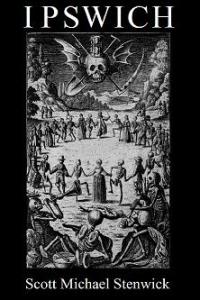
I already mentioned Ipswich, the long-awaited sequel to Arcana, in an earlier post, back when it was originally accepted for publication. It was tentatively scheduled for a spring release, but it’s looking like it will be summer now. We’ve been working on the editing and the manuscript is shaping up great. I’m very happy with it. I think you will be too.

If you liked Arcana you’ll love Ipswich. It’s a tighter, more accessible story that doesn’t skimp on the elements that made Arcana a unique novel. There’s magick, of course, along with necromancy, witchcraft, and spirits.

The second novel is a collaboration with Sheila Marshall, a paranormal vampire tale titled Written in Blood.

Written in Blood is set on the North Shore of Lake Superior, around Two Harbors and the evocatively named Castle Danger. In case you’re wondering, the latter is a real town. You can find it on a map and everything.

It tells the story of an ancient vampire with the power to write the fate of the Northland in his blood. He uses this power to write his ideal companion into existence, and summons her to Castle Danger. But she carries with her a secret that may lead to both their undoing.

Fans of vampire and paranormal fiction will love Written in Blood. It has mystery, romance, action, and of course plenty of bloodletting. Watch for it along with Ipswich this summer, and check out the Moonfire Publishing website for updates and announcements.

Published in Denver Witch Quarterly

denver_witch_quarterlyEven though I don’t live in Denver and don’t consider myself a witch, my article “Against Book Piracy” has been published in the latest issue of Denver Witch Quarterly. The current issue has a bunch of material about the now-infamous Donald Trump binding spell, but my article doesn’t have anything to do with that. If you’re interested in my thoughts on the binding spell and the “Trump Magick War,” they can be found here.

My article is more along the lines of my Truth About Writing post in the context of occult books and people who pirate them under the mistaken belief that we occult authors are making tons of money from our work. To be clear, we’re not. The occult is a tiny market, and at this point it’s pretty much impossible to make enough money writing occult books to live on, even at a minimum wage level.

The latest issue of Denver Witch Quarterly can be purchased here, from Smashwords.

Presenting at NOTOCON XI

I was originally asked to hold off on making this announcement until the official schedule was posted online, but since it’s up now I figure I can go ahead with it. This summer, I will be presenting on Heptarchial Evocation at NOTOCON XI, the eleventh biannual conference of Ordo Templi Orientis, in Orlando, Florida. The presentation is scheduled for 9 AM on Friday, August 11th of 2017. It might have been nice to do the presentation a little later in the day, since I’m not really a morning person, but it’s also pretty cool to be kicking off Friday’s track of ritual presentations.

The presentation will include a condensed version of my Introduction to the Heptarchia Mystica talk and a full Heptarchial evocation ritual done according to the procedure laid out in Mastering the Mystical Heptarchy, with a few additional tweaks for a Thelemic audience. After the conference, I will be making the text of my talk available over on Augoeides as per my usual practice. If you would like to buy a copy of my book to peruse before the presentation, just click on the title there to order.

So if you will be attending the conference, I hope that you’ll resist the urge to sleep in on Friday morning (which, to be fair, I might very well do myself if I wasn’t presenting) and come check it out. It should be a good time.

Six Kinds of Stories

I missed this article from The Atlantic when it came out almost a year ago and only recently came across it. A group of researchers have used artificial intelligence software to determine the main arcs found in storytelling. Kurt Vonnegut famously lectured on this topic, mapping the story chronology on one axis and the experience of the protagonist on the other. This method can be employed to show the essential “shapes” of stories and compare them to one another.

Vonnegut had mapped stories by hand, but in 2016, with sophisticated computing power, natural language processing, and reams of digitized text, it’s possible to map the narrative patterns in a huge corpus of literature. It’s also possible to ask a computer to identify the shapes of stories for you.

That’s what a group of researchers, from the University of Vermont and the University of Adelaide, set out to do. They collected computer-generated story arcs for nearly 2,000 works of fiction, classifying each into one of six core types of narratives (based on what happens to the protagonist):

1. Rags to Riches (rise)
2. Riches to Rags (fall)
3. Man in a Hole (fall then rise)
4. Icarus (rise then fall)
5. Cinderella (rise then fall then rise)
6. Oedipus (fall then rise then fall)

Their focus was on the emotional trajectory of a story, not merely its plot. They also analyzed which emotional structure writers used most, and how that contrasted with the ones readers liked best, then published a preprint paper of their findings on the scholarship website arXiv.org. More on that in a minute.

This is a fascinating area of research that may someday lead to computer-generated or at least computer-assisted fiction writing. For example, I can imagine a “shape tool” for writing that would take a story in progress and analyze it by chronology and character. This is necessary for longer works like novels, since for a novel to really be complete even the minor characters should have their own arc or “shape.” That’s one of the keys to deep world-building that feels real and natural.

As far as popularity goes, the team also worked on analyzing which stories were most liked by readers, which is helpful when you’re trying to decide what to write in the first place. And in fact, they may have identified a disconnect between the stories writers like to write and the stories readers like to read – though further research is probably required in order to reach anything like a definative conclusion.

“Rags to Riches” may be popular among writers, but it isn’t necessarily the emotional arc that readers reach for most. The categories that include the greatest total number of books are not the most popular, the researchers found. They examined total downloads for all books from Project Gutenberg, then divvied them up by mode. Measured this way, “Rags to Riches” is eclipsed by “Oedipus”, “Man in a Hole” and, perhaps not surprisingly, “Cinderella,” all of which were more popular.

What this suggests is that in general, while readers generally like happy endings, they also like to see the protagonist of a story overcome problems and obstacles in order to get there. And with tragedies, they like to see the protagonist succeed before he or she is eventually undone. That should be fairly obvious, as a story with a straight trajectory is relatively free of dramatic tension, but it’s still a good rule to keep in mind.

So which of these stories do you write, and why? Does the article make you think about ways you can improve the structures of your stories?

Featured on Thelema NOW! Podcast

This week my introductory lecture on Enochian magick is featured on Thelema NOW!, the official podcast of US Grand Lodge OTO. The Thelema NOW! homepage is here, and a direct link to the podcast is here.

The prepared text of my lecture was published over on Augoeides back in January right after I presented it, but one of the things about checking out the recording is that I don’t always stick to my prepared talk one hundred percent. Also, I usually allow people to ask questions throughout my presentations, and the answers to those are not included in the prepared text.

Enjoy!